One hub, many communities
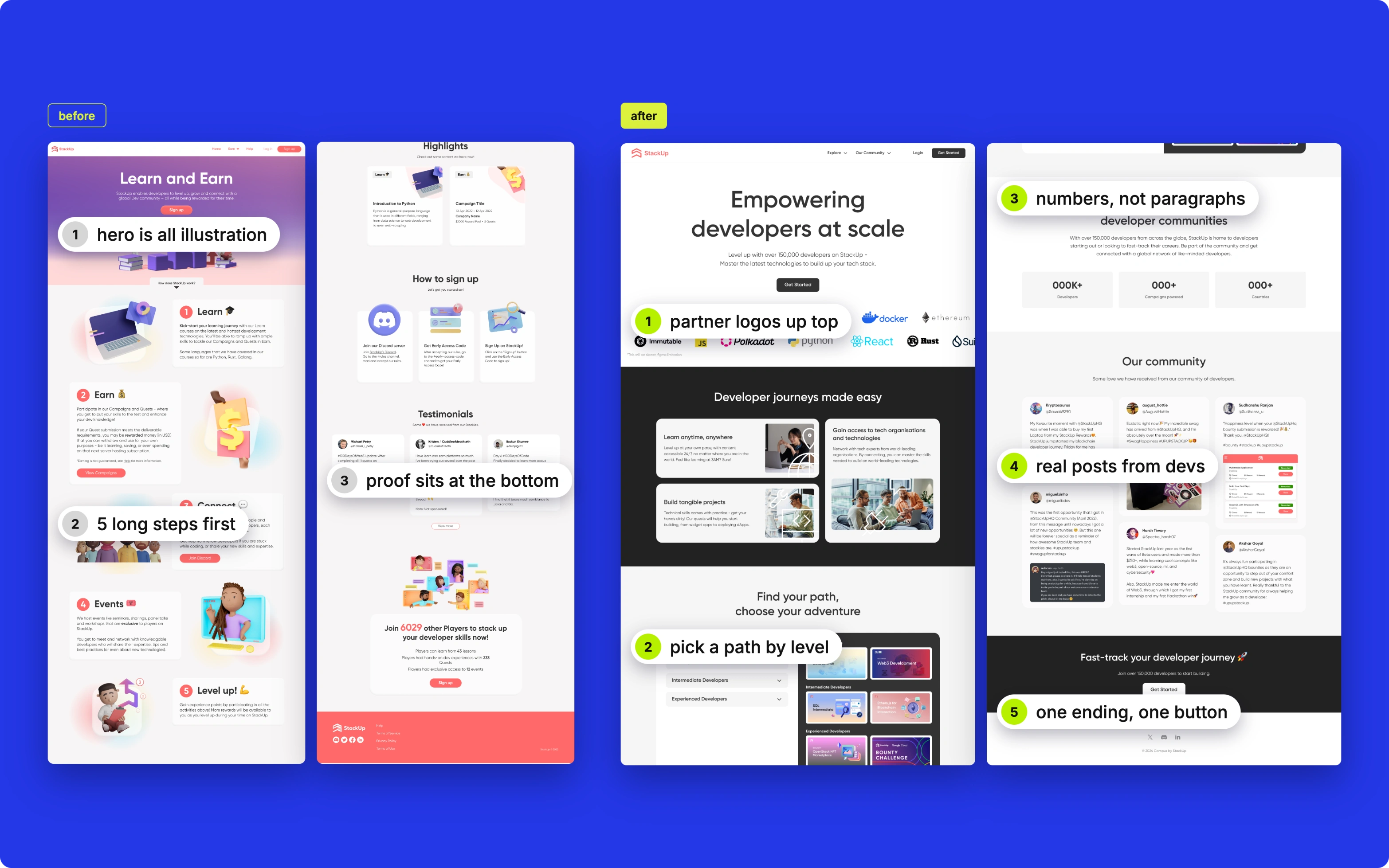
stackup started as a bubble prototype. it proved the idea and then stopped scaling, so we rebuilt it as one platform made of modules that stand on their own.
the prototype started to crack.
as more people joined, performance dropped and every new feature added technical debt. users also couldn't say what the platform was for. that last one was fair. the product wasn't sure yet either.
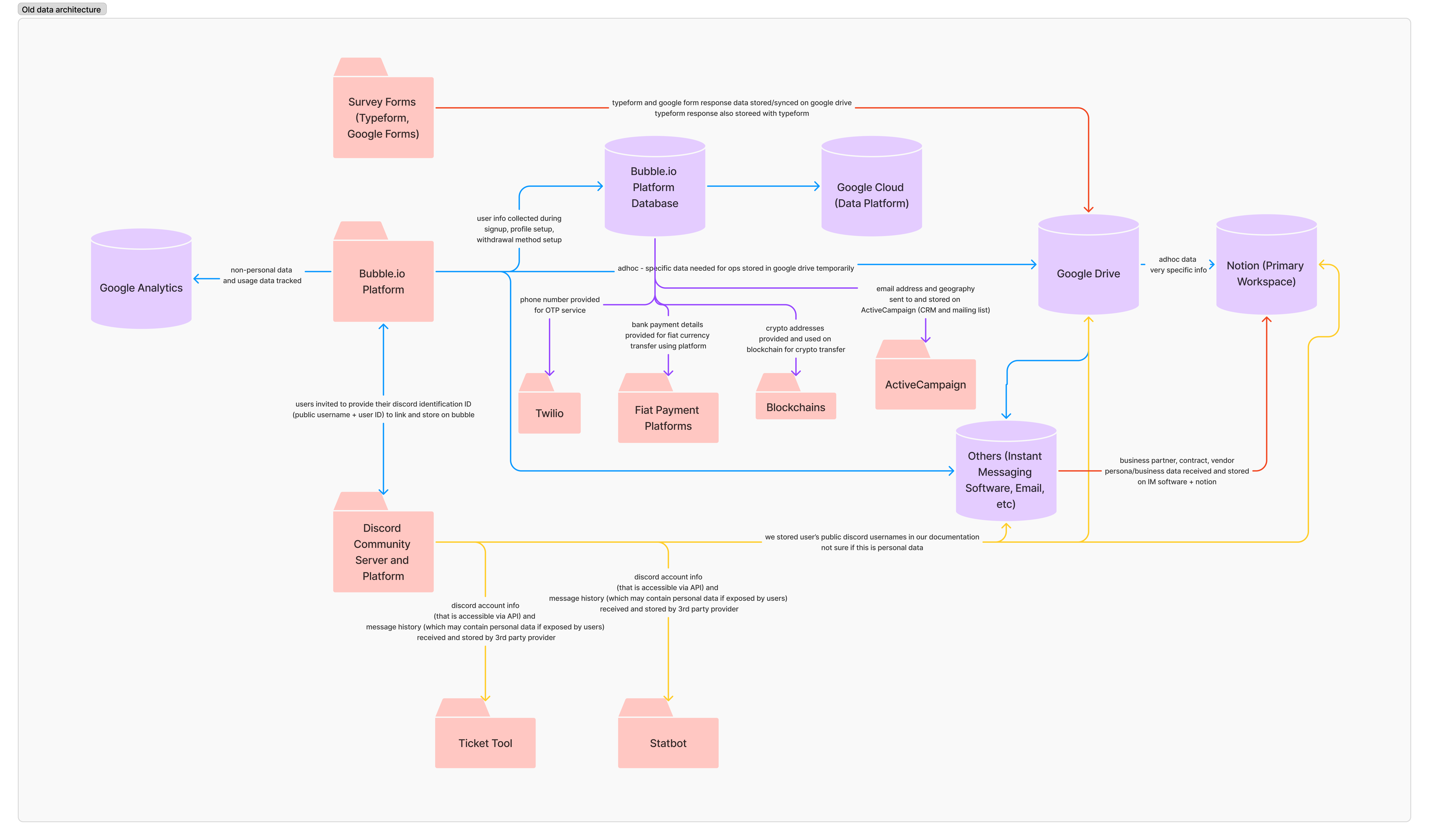
first we traced how the prototype held together.
we mapped data flows and every external integration, and found a system spread across too many tools. alongside that we ran research with developers, campaign creators and learners. they wanted useful tools and a community in the same place. competitors offered one or the other.
what the platform had to do well no matter what.
clear lines between modules.
people need different things from different parts of the product. the prototype blurred those boundaries, which goes a long way to explaining why it confused people. i drew an information architecture that keeps modules independent, so new ones can be added without tangling the old.
a minimum valuable platform.
viable means it works. valuable means people want to use it. we went in this order:
it's still early.
we launched with a clearer information architecture and an adaptive dashboard, built from modular components. load issues dropped, and the shared patterns now run onboard and events without redesigns.
no product is too early for architecture.
the prototype taught us a lot, but without structure everything we learned turned into a bottleneck. the most useful outcome was an answer to a plain question: what is this for, and who is it for?