What it takes to change who you are
business china had the legacy. the question was whether a generation raised differently from their parents saw themselves in it.
tradition vs modernity was the wrong frame.
the usual assumption is that the two pull against each other. students and young professionals told us something else. to them mandarin was possibility more than homework or heritage, a way to connect with people and carve out space in a future that's getting more global and more chinese at once. so the question became how business china stays relevant in that liminal space.
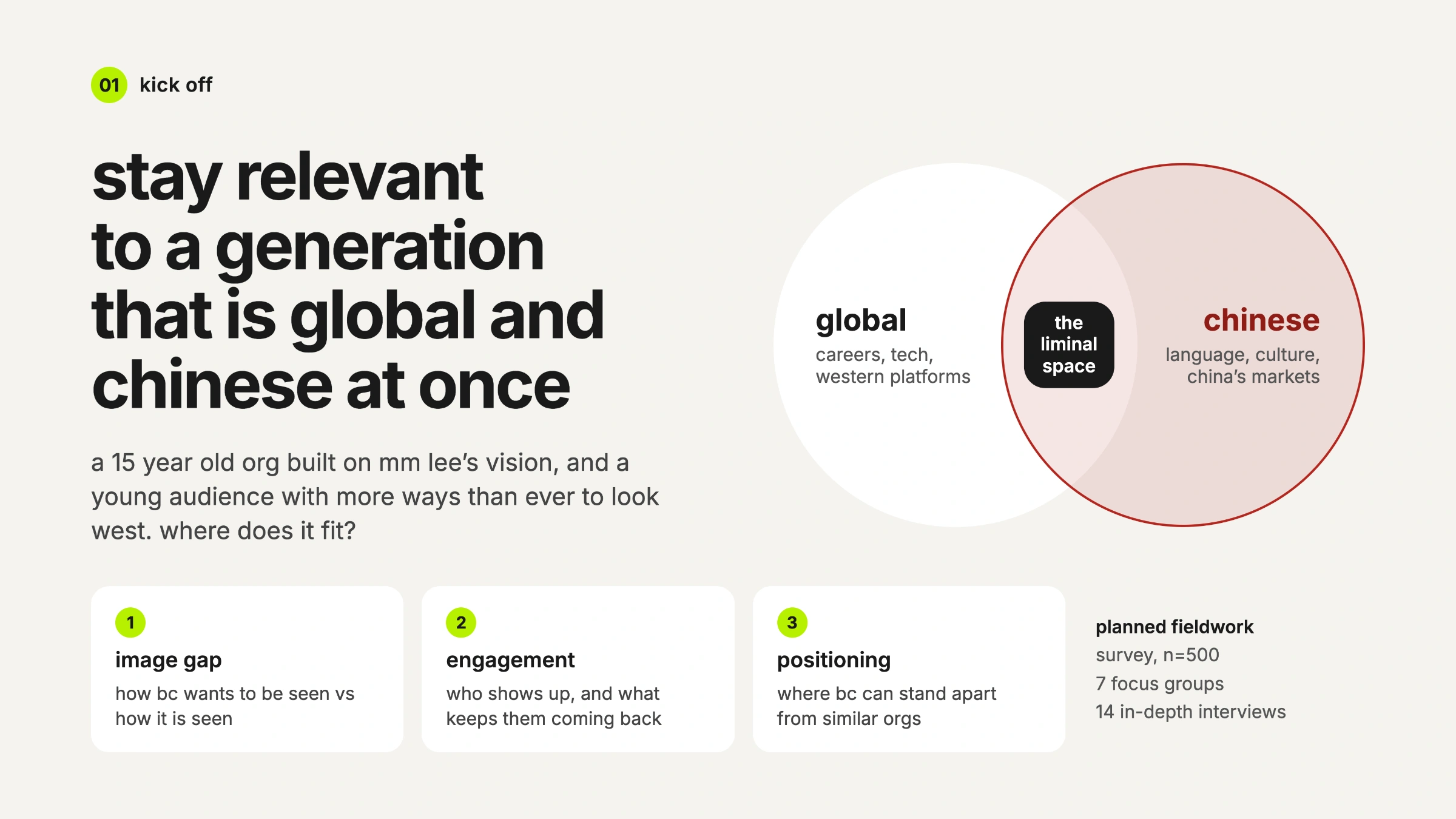
we talked to both sides of the bridge.
- weeks 1 to 2Stakeholder kick-offsat down with business china's leadership to pin down what the legacy meant to them, what they were afraid of losing, and what success would look like.
- weeks 3 to 4Survey buildwrote the questionnaire, piloted it with a handful of students, and reworded the questions that read as leading or nostalgic.
- month 2Survey in fielddistributed through universities and young professional networks, checking response quotas every week and nudging the under-represented groups.
- months 2 to 3Focus groupswrote a screener on language confidence and career stage for our vendor, then ran groups that mixed and separated them, to see where opinions shifted with company.
- month 3Back to leadershiptook early themes to leaders to test them against the long-term vision, which is where the unwritten hopes surfaced.
- month 4Synthesis & reviewclustered everything in miro and walked business china through it in a working session before the final report.
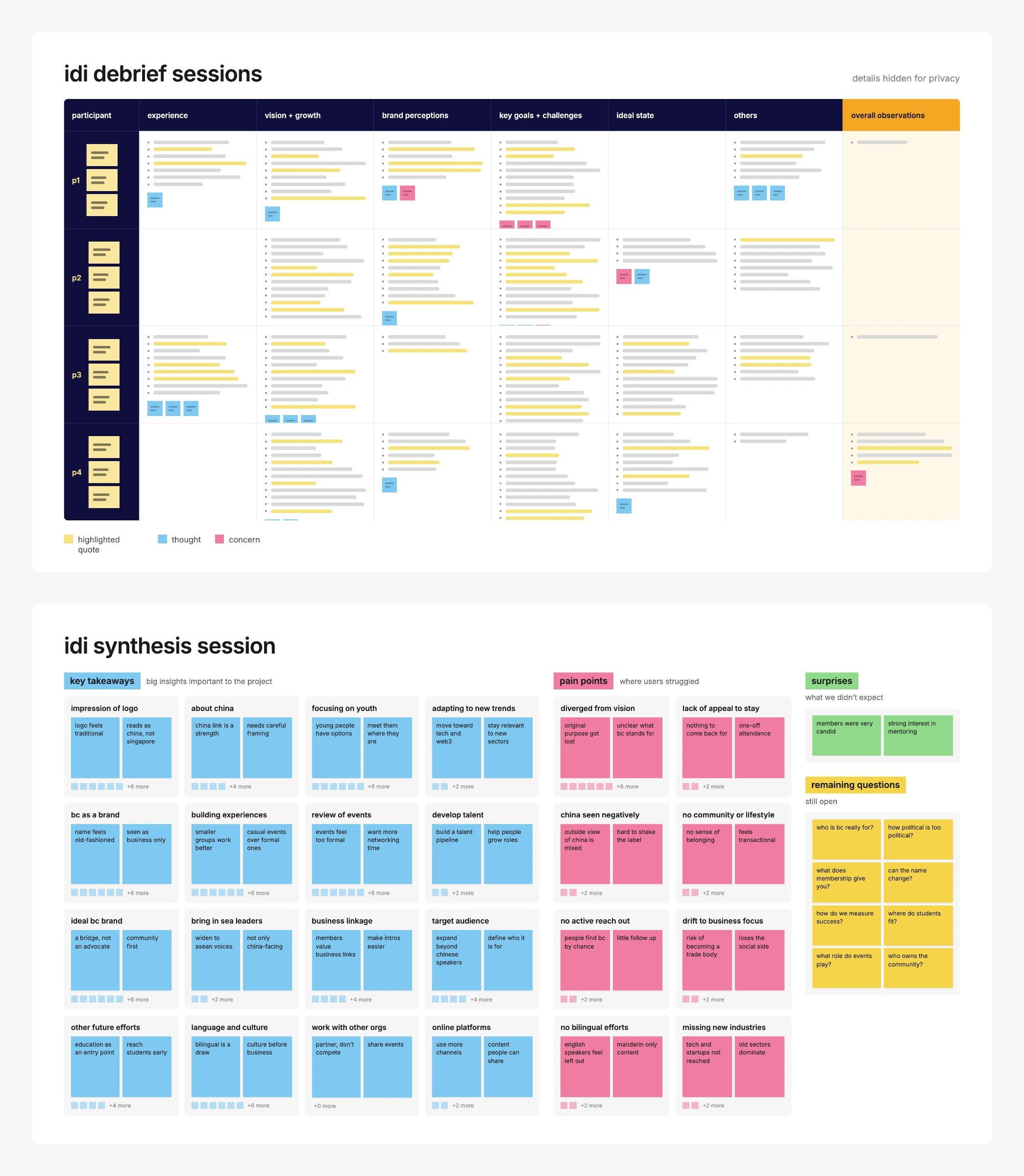
don't speak down to us.
one theme kept coming back. this generation wants dialogue and agency, and the licence to remix tradition on their own terms.
we put the legacy in their words.
the direction stuck.
business china has grown its youth work through the youth knowledge programme (launched 2024) and its long-running youth chapter, both in line with where the research pointed.